
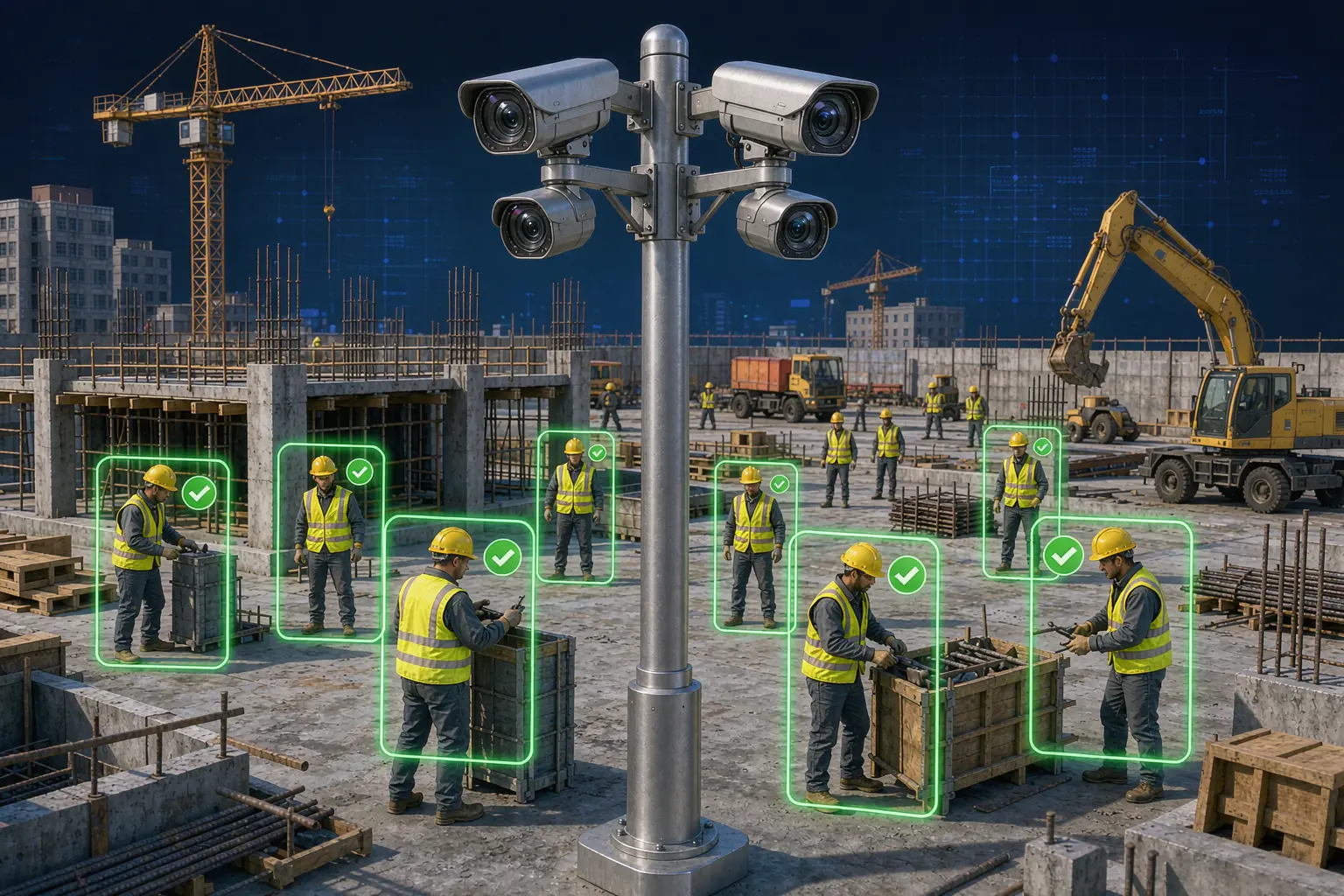
Hard Hat Detection: A Practical Guide for Construction Sites
When a worker skips a hard hat, the risk is measured in head injuries and stop-work orders. Hard hat detection with AI surveillance watches every camera feed and alerts you the instant someone on your site is not wearing a helmet — no guard, no reviewer, no delay. This guide explains what hard hat detection does, how accurate it really is, and how to deploy it on your site.
Why Hard Hat Detection Matters
Head impact is a leading cause of serious injury on construction and industrial sites. Beyond the human cost, a single violation can trigger a fine or shut down a whole work zone. Manual supervision simply cannot watch dozens of workers across a busy site at all times. Hard hat detection automates that watch, turning every existing camera into an always-on safety inspector. OSHA requires head protection on most worksites — see the OSHA head protection standard (1926.100) and the history and types of the hard hat on Wikipedia.
How Hard Hat Detection Works
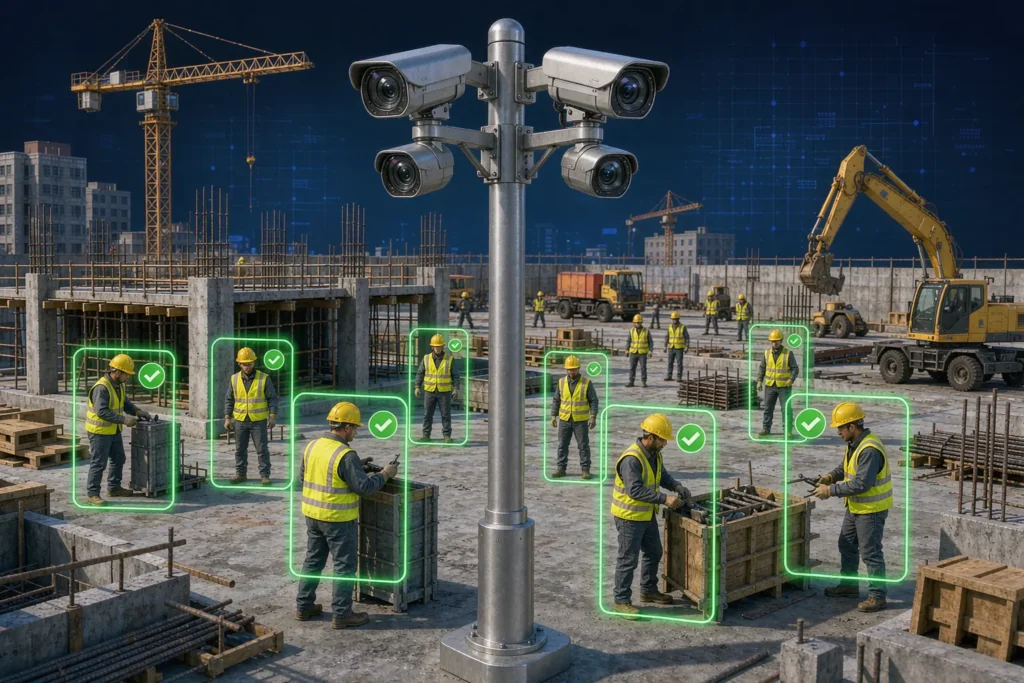
The algorithm analyzes each person in the video frame and checks whether a helmet is present on the head. When it identifies a worker without head protection, it raises an alert with the timestamp and camera location. Modern systems handle multiple workers in one frame, work at various distances, and keep false alarms low by focusing on head region geometry rather than just color.
What Hard Hat Detection Can Do
- Real-time alerts – Flag a violation within seconds, not at the next safety meeting.
- Overlap with other PPE – Combine with harness, hi-vis vest and mask detection for a complete PPE picture.
- Zone and time rules – Only enforce in hard-hat areas during work hours, so office zones don’t trigger noise.
- Evidence for compliance – Keep a record of violations for audits and retraining.
Accuracy and Real-World Limits
Modern hard hat detection is accurate, but results depend on camera angle and lighting. A top-down view catches the helmet best; a low, backlit angle is harder. Choose camera placement carefully, and expect to tune sensitivity for your site. Good systems let you set an acceptable confidence threshold to balance detection with false alarms.
Which Industries Need Hard Hat Detection?
Construction tops the list, but the need extends to manufacturing plants, energy facilities, warehouses with overhead loads, and any site where falling-object or head-impact hazards exist. Pair it with perimeter and fire detection for a full, integrated safety system — see the complete construction site safety guide.
How to Deploy Hard Hat Detection
You don’t replace your camera fleet. An edge AI box ingests your existing CCTV streams and runs hard hat detection locally, with no cloud dependency. Start with a Starter Kit on a few cameras, confirm accuracy on your site, then scale to 2–128 channels with a library of 198+ pre-built algorithms to add as you grow.
A typical deployment follows a simple timeline: audit the site and mark hard-hat zones on day one, connect the box and draw regions on day two, tune sensitivity against real footage in the first week, and roll out to remaining cameras once the false-alarm rate is acceptable. Because everything runs on-premises, there are no monthly per-camera fees and the video evidence stays under your control — two factors that make the business case straightforward for site owners and safety managers alike.
The longer explanation sits in how does hard hat detection work. The longer explanation sits in hard hat detection system cost.
Common Questions About Hard Hat Detection
Can it detect someone wearing a backward or loose helmet? Yes — it looks for the helmet on the head region, so position and fit are generally recognized even if not centered.
Does it work at night? It works best with adequate lighting; pair with IR or better lighting in dark zones.
Does it confuse hard hats with caps or hoods? Good models separate helmets from soft caps by shape and coverage; a hooded jacket may require tune-up in cold-weather sites.
Is it expensive? Far less than replacing cameras or adding staffing — cost scales with channels and algorithms.
Add Hard Hat Detection to Your Site
Stop relying on spot checks. Tell us your scenario and we’ll map your site to the right PPE and safety algorithms, or start with a Starter Kit to test on your own cameras. See related safety detections: fall protection detection and hi-vis vest detection, plus the full construction site safety guide.