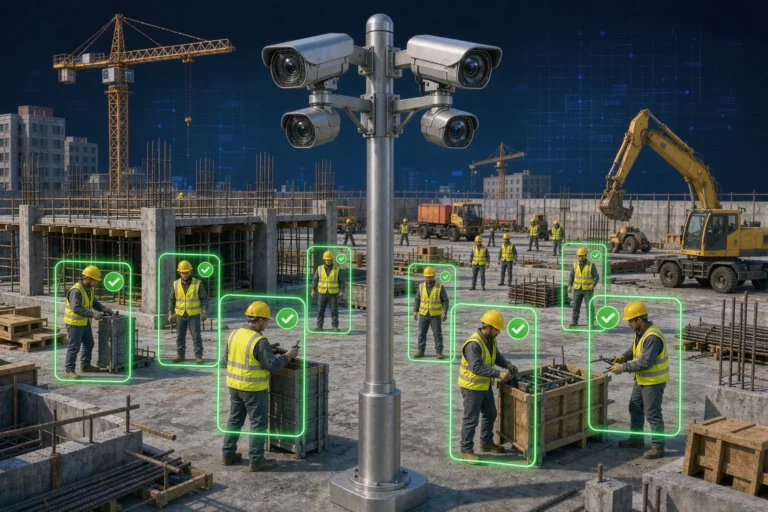
Fire Extinguisher & Equipment Detection | Compliance Inspection
Fire safety gear is only useful if it is right there when you need it. Yet most sites still check extinguishers, hydrants, and hose reels by hand — a clipboard walk once a week that misses moved, blocked, or missing equipment the other six days. Fire equipment detection with AI video analytics turns your existing cameras into an always-on inspector that confirms every device is present, unblocked, and in place, and raises an alert the moment something is wrong. This guide covers how it works, what it catches, and where it pays off.
For the standards behind fire readiness, the National Fire Protection Association (NFPA) publishes the codes sites follow, and OSHA covers the workplace safety obligations behind equipment inspections.
Why Manual Fire-Equipment Checks Slip
The gap is simple: a human inspector visits each device on a schedule, not continuously. Between visits, an extinguisher gets wheeled aside during a layout change, a hydrant gets buried behind a new pallet stack, or a reel is taken for another floor and never returned. By the next weekly check, nobody remembers. The cost of that gap is paid only once — during the fire — when the nearest device is gone or unreachable. Fire equipment detection closes the gap by watching every device, every hour, from cameras you already run.
How Fire Equipment Detection Works
The model is trained to recognize the specific devices on your site — typically portable extinguishers, wall hydrants, hose reels, and alarm call points. On each camera view it confirms two things: is the device present in its assigned location, and is it clear of obstruction. Detection runs on-device at the edge, so the video never leaves your site and the check works offline. Our edge boxes cover 2–128 channels and 1–256 TOPS, so a single box can watch a floor or an entire building alongside the other 198+ algorithms in the library.
What the System Catches
- Missing device — an extinguisher removed from its bracket or a hydrant taken offline is flagged immediately.
- Obstruction — stock, carts, or shelving blocking a device or its access path triggers an alert before it becomes a violation.
- Wrong location — equipment that has been relocated shows up as “not in assigned zone,” so nothing hides in a corner.
- Coverage gaps — if a camera loses the device view entirely, that itself is a tampering signal to investigate.
Automatic Inspection Reports
Instead of a weekly paper round, the system generates a continuous compliance log: each device, its status, the last time it was confirmed clear, and any open alerts. Safety managers get a dashboard and can export evidence for audits without walking the floor. Pair it with flame detection and smoke detection and you cover both “is the gear there” and “is there a fire starting” from the same cameras.
Where It Pays Off
The strongest fit is anywhere equipment is moved often and audits matter:
- Manufacturing — production lines reshuffle, and extinguishers drift; continuous checks keep the line compliant.
- Warehousing & logistics — high pallet turnover is the classic cause of blocked hydrants; automated alerts stop it.
- Commercial & retail — multi-tenant buildings where responsibility for equipment is shared benefit from an objective, timestamped record.
Can It Read Pressure or Expiry?
Device-presence and obstruction detection is the reliable core. Reading a pressure gauge or printed expiry date from video is possible in some setups but depends on camera distance and label clarity, so we scope it as a pilot feature rather than promise it everywhere. The highest-value, lowest-risk win is simply knowing every device is present and reachable — every day.
This is applied end to end in industrial safety system.
FAQ
Will a device blocked by a pallet trigger an alert? Yes. Obstruction of the device or its access path is a core trigger; you set how much clearance must be kept.
Do I need new cameras? No. The model runs on your existing CCTV through an edge box — no camera swap required.
How is this different from flame and smoke detection? Equipment detection confirms your gear is ready before an incident; flame and smoke detection react during one. They are complementary layers on the same feeds.
Can it replace the human inspector entirely? It replaces the routine presence check and the paper trail, but most sites keep a periodic physical verification of pressure and condition. The AI handles the “is it there and clear” question continuously.
Tell Us Your Scenario. Want to see fire-equipment checks run on your own cameras? Our tested configurations are available on a Starter Kit — explore the Starter Kit or contact us with your floor plan.